

85 people worked our wedding reception. Not counting the venue’s catering crew - they handled their own thing. I mean photographers, videographers, decor teams, tent riggers, lighting people, a photo booth operator, florists, and more. All for one evening. 200 guests.
Most guests had no idea.
Honestly, I had no idea either. Not really. Not until I was standing in the middle of it.
We did a two-day event. Day one was the Sangjit - the Chinese ceremony. Day two was the church wedding followed by the reception. Two completely different vibes, two different sets of vendors, two different timelines running back to back.
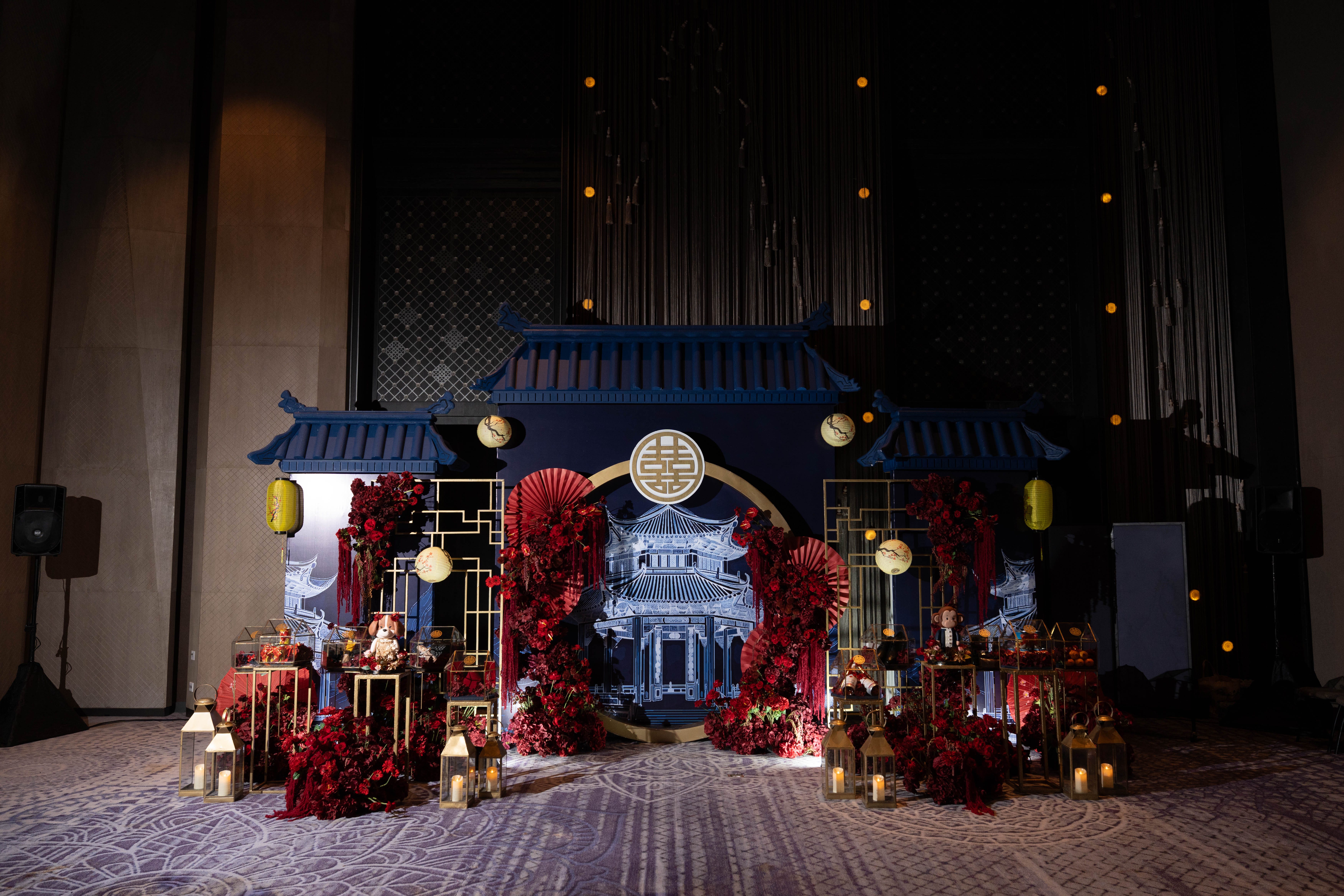
My wife spent countless hours on the details I wouldn’t have even known to think about. The design, the vision, the vendor relationships - that was her. Our wedding organizer was the one holding the operational threads together across both days. I watched both of them work, and I kept thinking: this is so much more complicated than I ever imagined a wedding could be.
I think most people have a vague sense that weddings take a lot of planning. You pick a venue, you pick a dress, you book some vendors, it comes together. That’s roughly what I thought before we started.
That is not what happens.
The decor team couldn’t start until the tent crew finished. The tent crew had a weather dependency. The photo team needed to be in two places at the same time during the Sangjit because the key moments overlap fast and don’t wait for anyone. The florist had a delivery window that conflicted with venue access. None of these people knew each other. None of them had worked together before. And somehow they all had to function as one unit across two full days.
None of this is visible to a guest. You walk in, it looks beautiful, everything is in place, the flowers are exactly where they should be, the lighting is right, the photo booth is staffed, someone hands you a drink. You have no idea that there was a call happening the evening before about whether the tent could go up given the weather forecast, or that two vendors changed their arrival windows in the 48 hours before, or that someone added a crew member nobody knew about and the whole schedule had to absorb that.
That invisibility is the goal. It’s also the hard part.
Our wedding organizer had a sheet. Literally a spreadsheet. Every vendor, arrival time, dependency, contact, and what breaks if they’re late. It got updated constantly in the days before. That was the coordination layer. Not a complicated system, not special software. Just someone who owned the full picture and kept updating it as reality changed.
What surprised me most was realizing how much skill that actually takes. It’s not glamorous. Nobody posts about it. When people talk about weddings they talk about the dress and the flowers and the first dance and the food. Nobody talks about the person who figured out that the florist vans can’t come through the venue entrance until the tent crew has cleared their equipment, and communicated that to both parties a week in advance so it didn’t become a crisis on the day.
That person exists at every wedding. You just never think about them.
I kept noticing things throughout both days that I would never have noticed before we went through the planning process. The way the lighting team disappeared after setup so guests didn’t see the rigging. The way the photo and video teams coordinated their positions without bumping into each other, which only works if someone has thought through the shot list and talked to both teams ahead of time. The way the decor came down after the reception in a way that felt organized rather than chaotic, because even the strike had a sequence. (the next morning everything was taken down, like no event had ever happened)
All of it had been choreographed. All of it looked spontaneous.
I think what surprised me most was scale. 85 people for one reception. I would have guessed maybe 20. Maybe 30. You think about the obvious ones - the photographer, the DJ, the catering staff. You don’t think about the team that assembled the floral installations, or the separate person who handled the photo booth, or the lighting crew that was different from the tent crew, or the people who came specifically to handle decor setup and had nothing to do with anything else.
Each of those groups is its own small business. They have their own way of doing things, their own communication style, their own sense of what their job is and where it ends. They’re not naturally going to coordinate with each other. They’re going to do their piece and assume someone else is handling the rest.
Someone has to hold the whole thing together. Someone has to know that the florist can’t do her job until the tent crew has finished theirs, and that the tent crew has a weather window they’re working against, and that the decor team is waiting on both of them before they can even start unloading.
That’s a real job. It requires a specific kind of thinking. You have to be able to hold a lot of moving pieces in your head simultaneously, see the dependencies between them, and communicate proactively rather than reactively. Waiting for a problem to surface is too late. By the time the florist shows up and can’t get her vans in, you’ve already lost an hour.
My wife and our wedding organizer did this across two full days with two different sets of vendors and two completely different event formats. Watching it work - and work well - made me genuinely appreciate something I’d had no framework for before.
Weddings look like a celebration. They are a celebration. But underneath that, they’re a logistics operation that would stress out a lot of professional project managers. The timeline is fixed, the deadline is public, and there’s no rescheduling. Whatever’s not ready at 5pm when guests start arriving is just not ready.
That constraint forces a kind of planning discipline that I found remarkable. (I am a horrible planner myself).
Everything had to be sequenced correctly in advance because there was no room to improvise on the day. You couldn’t tell 200 guests to wait in the parking lot while the tent crew finished up. The tent crew had to be done before guests arrived, which meant starting early enough to account for delays (they worked over night), which meant accounting for weather, which meant having a contingency conversation with the venue days earlier.
All of that happened. All of it was invisible.
The 85 people behind the scenes at our reception were excellent at their jobs. Part of being excellent at their jobs was making sure that 200 guests had a wonderful evening without any awareness of the coordination that made it possible.
That’s a strange kind of expertise. You succeed by not being noticed.
I have a lot more respect for wedding organizers now than I did before. And honestly, a lot more respect for my wife for being the kind of person who could hold that vision together across two days, two cultures, two completely different event formats, and dozens of vendors who had never met each other.
The wedding went well. Both days. What I’ll remember is the celebration. But I won’t forget what it took to get there.